
Key findings
10-OH-THC is a relatively new cannabinoid derivative that has gained increasing attention in the European market in recent years. This article provides a comprehensive overview of its origin, effects, and available products this hydroxylated THC metabolite.
-
Hydroxylated derivative: 10 OH THC is produced as a metabolite in human metabolism during the breakdown of THC in the liver and is also synthetically produced under controlled laboratory conditions.
-
Milder effect: Compared to classic THC and the primary metabolite 11 OH THC, 10-Hydroxy-THC shows a significantly weaker psychoactive potency with lower CB1 receptor affinity.
-
Limited research available: As of 2023/2024, most findings are based on structural comparisons with related cannabinoids and anecdotal reports – controlled human studies are largely lacking.
-
Diverse product range: Vapes, flowers and prerolls with high 10 OH THC concentrations can be found on the market, although the classic THC content must comply with the EU limits of less than 0.2 THC.
-
Legal gray area: The regulatory classification varies depending on the country – in Germany and the EU, consumers should check the current legal situation before purchasing.
What is 10-OH-THC?
10-OH-THC stands for 10-hydroxytetrahydrocannabinol and is structurally closely related to the well-known delta-9-THC. The compound differs from classic THC by an additional hydroxyl group (OH) at the 10th position of the molecule, which results in fundamentally different properties when interacting with the endocannabinoid system.
-
10-OH-THC is a metabolite and cannabinoid derivative that is practically non-existent in the raw cannabis plant.
-
The substance is produced in very small quantities in the human body during the enzymatic breakdown of THC, mainly in the liver.
-
Unlike naturally occurring cannabinoids such as CBD, industrial production requires targeted chemical modification.
-
The change at position 10 of the molecule leads to a different binding affinity to CB1 receptors in the brain and CB2 receptors in peripheral tissue.
-
This structural adaptation explains the characteristically milder psychoactive effect compared to the original substance.
Formation of 10-OH-THC: Hydroxylation & Hydrogenation
The formation of 10-OH-THC occurs via two main processes: hydroxylation, as a natural or synthetic process, and hydrogenation, as a purely industrial method. Both methods alter the structure of the THC molecule in specific ways and enable the production of this cannabinoid derivative for the commercial market.
-
Hydroxylation: Refers to the addition of a hydroxyl group (-OH) to the THC molecule, specifically at position 10 of the chemical structure.
-
In human metabolism, this reaction occurs primarily through liver enzymes of the CYP450 system after the ingestion of THC-containing products.
-
In the laboratory, hydroxylation is replicated under precisely controlled conditions – with specific temperatures, solvents and catalysts.
-
Hydrogenation: This involves the addition of hydrogen atoms under increased pressure and with metal catalysts to optimize the stability and solubility of the cannabinoid structure.
-
Since the late 2010s, industrial syntheses have been refined, so that 10 OH THC can now be produced consistently and on a larger scale.
Natural origin in the body
When THC-containing cannabis products are consumed, the body immediately begins to break down the psychoactive substance. This natural process takes place primarily in the liver and produces various metabolites with different properties.
-
10-OH-THC is formed as a byproduct of THC metabolism after oral or inhalational ingestion.
-
Enzymes in the liver – especially CYP2C9 and CYP3A4 – primarily convert THC into 11-OH-THC, while 10-OH-THC is only produced in smaller amounts.
-
Blood concentrations of 10-OH-THC are typically significantly lower than those of 11-OH-THC and are rapidly broken down into inactive metabolites.
-
These naturally occurring amounts are too small to scientifically define clearly attributable, independent effects in humans.
-
The majority of 10-OH-THC available on the market therefore comes from targeted laboratory synthesis, not from natural extraction.
Production in the laboratory and in industry
The commercial production of 10-OH-THC requires precisely controlled conditions and specialized equipment. Manufacturers in the cannabis industry use established chemical processes to produce the cannabinoid with consistent quality and purity.

-
The starting material is highly purified THC, often obtained from hemp or cannabis extracts with a low delta-9-THC content.
-
Chemists perform a targeted hydroxylation at the 10th position to produce a defined amount of the hydroxy derivative.
-
Critical parameters are precisely controlled: reaction temperature (typically 20–60 °C), pressure and type of catalyst, such as metal catalysts.
-
The extracted substance undergoes subsequent purification steps and is tested for purity – usually via HPLC analysis (high-performance liquid chromatography).
-
Only after quality control is the 10-OH-THC incorporated into products such as vapes, flowers or concentrates.
-
In the EU and Germany, these manufacturing steps are subject to regulatory requirements such as GMP guidelines, provided the products are intended for the legal market.
How does 10-OH-THC affect the body?
Like other cannabinoids, 10-OH-THC interacts with the body's endocannabinoid system (ECS), which regulates key functions such as sleep, mood, appetite, and pain perception. However, current data on this specific cannabinoid is limited, which is why many statements are based on theoretical models and anecdotal evidence.
-
The endocannabinoid system consists of receptors, enzymes, and endogenous cannabinoids that form a complex signaling network.
-
10-OH-THC binds mainly to CB1 receptors in the central nervous system, but with significantly lower affinity than Delta-9-THC and 11-OH-THC.
-
This weaker bond results in a tendency towards milder psychoactive effects – often described as “gentler” and less overwhelming.
-
Preclinical data and theoretical models suggest that 10-OH-THC may additionally modulate CB2 receptors in the immune system, which would explain potential effects on inflammatory processes.
-
As of early 2024, there were hardly any published human studies specifically on 10-OH-THC – most statements were derived from structural comparisons with related cannabinoids.
Possible subjective effects
The effects of 10-OH-THC are experienced very differently by individual users. Anecdotal reports from online forums and product reviews provide initial indications of the subjective effects, but should not be confused with scientifically validated data.
-
Users often describe a relaxing, mildly mood-enhancing effect without the strong high intensity typical of classic THC.
-
Some cannabinoid users report gentle physical relaxation and easier unwinding in the evening (anecdotal reports).
-
Compared to THC Less pronounced perceptual shifts and less severe impairment of concentration are frequently described.
-
The high is generally perceived as "clearer" and more controllable.
-
Reactions vary greatly depending on body weight, individual tolerance, and concurrent use of other substances.
-
Overdoses can cause typical THC side effects such as nausea, dry mouth, or dizziness.
Interaction with the endocannabinoid system
The endocannabinoid system comprises two main receptor types: CB1 receptors, which are predominantly located in the brain and nervous system, and CB2 receptors, which are mainly found in the immune system and peripheral tissues.
-
10-OH-THC binds predominantly to the CB1 receptor and modulates the release of neurotransmitters there.
-
This modulation can influence perception, mood, and stress responses.
-
The weaker binding affinity compared to 11-OH-THC leads to reduced psychoactive potency.
-
10-OH-THC theoretically competes with endogenous endocannabinoids such as anandamide and 2-AG for receptor sites.
-
This competition can alter the natural signaling effect of the body's own cannabinoids.
-
Detailed receptor binding data for 10-OH-THC have so far only come from a few preclinical studies and computer-aided model calculations.
Potential benefits and applications of 10-OH-THC
The potential benefits of 10-OH-THC are primarily derived from its chemical similarity to THC and CBD, as well as from consumer experiences. It is important to understand that it is not approved as a medicine and should not be considered a substitute for medically prescribed therapies.
The following areas of application are based on theoretical considerations and anecdotal evidence:
|
Potential benefits |
Evidence |
Notes |
|---|---|---|
|
Relaxation & stress reduction |
Anecdotal |
Based on user reports |
|
Sleep support |
Theoretically plausible |
No specific studies |
|
Pain relief |
Theoretically plausible |
Derived from THC/CBD data |
|
Anti-inflammatory |
Preclinical indications |
CB2 modulation suspected |
Important risk warning: Possible side effects include fatigue, dry mouth, fluctuations in blood pressure, and restlessness. Interactions with other medications—especially those metabolized via the CYP450 system—cannot be ruled out.
Relaxation, stress and anxiety reduction
Many users turn to 10-OH-THC products to unwind at the end of a stressful day. Its milder effects compared to classic THC make this cannabinoid appealing to certain user groups.
-
Users often use 10-OH-THC for evening relaxation, preferably in vape form or as flowers in a vaporizer.
-
The milder psychoactive effect might be suitable for people who are sensitive to strong intoxicating effects.
-
As of 2024, there are no controlled clinical studies on anxiety or stress disorders with 10-OH-THC.
-
Assumptions about efficacy are based on analogy to THC/CBD research and individual experience reports.
-
People with existing anxiety disorders, psychoses, or psychiatric illnesses should only consider taking this medication after consulting a doctor.
-
Its use as an alternative to established therapies is expressly not recommended.
Sleep and nighttime recovery
Sleep problems are among the most common reasons why people try cannabinoid products. While research on cannabis and sleep has increased in recent years, specific studies on 10-OH-THC .
-
Sleep studies on cannabis products from 2020–2023 show that a high proportion of participants reported improved sleep onset – without examining 10-OH-THC separately.
-
These data only allow for the cautious conclusion that structurally similar cannabinoids may have sleep-promoting effects.
-
Users in forums state that they use 10-OH-THC especially to "wind down" before going to sleep.
-
The relaxing effect without a strong high could theoretically be more beneficial for sleep than intensely psychoactive cannabinoids.
-
Long-term effects on sleep architecture (REM phases, deep sleep components) are unknown.
-
Prolonged use without medical supervision is not recommended, especially in cases of existing sleep disorders.
Potential for pain and inflammation
Many cannabinoids have demonstrated anti-inflammatory and analgesic properties in scientific studies. THC, CBD, and CBG These compounds are among the best-studied in this field. 10-OH-THC is considered another candidate for related research due to its structural similarity.
-
The interaction with CB2 receptors in the immune system could theoretically explain inflammation-modulating effects.
-
As of 2023/2024, there are no randomized controlled trials with 10-OH-THC in pain patients.
-
User reports on pain relief serve solely as anecdotal evidence.
-
The transfer of findings from THC or CBD studies to 10-OH-THC has not been scientifically validated.
-
Chronic pain conditions should always be diagnosed and treated by a doctor.
10-OH-THC compared to 11-OH-THC
Both 10-OH-THC and 11-OH-THC are metabolites of THC that are practically non-existent in the cannabis plant itself. A comparison of these two compounds reveals significant differences in their formation, potency, and practical relevance.
-
Origin: 11-OH-THC is the dominant active metabolite, primarily produced in the liver after oral THC ingestion. 10-OH-THC, on the other hand, is formed as a minor metabolite in significantly smaller quantities.
-
Psychoactive potency: 11-OH-THC has been proven to be highly psychoactive – some studies even suggest a higher potency than THC itself. In comparison, 10-OH-THC shows lower CB1 affinity and correspondingly weaker psychoactive effects.
-
Practical significance: In oral dosage forms such as edibles, 11-OH-THC is responsible for the characteristically delayed but intense effect. The role of 10-OH-THC has so far been scarcely investigated systematically.
-
Product development: The milder nature of 10-OH-THC makes it interesting for products that are intentionally designed to offer a reduced psychoactive component – a focus of many current cannabinoid innovations.
|
Characteristic |
10-OH-THC |
11-OH-THC |
|---|---|---|
|
Education |
minor metabolite |
Main metabolite |
|
CB1 affinity |
Small amount |
High |
|
Psychoactivity |
Mild |
Strong |
|
State of research |
Limited |
Extensive |
Products containing 10-OH-THC: Forms, application & storage
Various product categories containing 10-OH-THC are available on the European market (as of 2023/2024). The 10-OH-THC product range primarily comprises inhalation products, as these offer a fast and controllable effect.
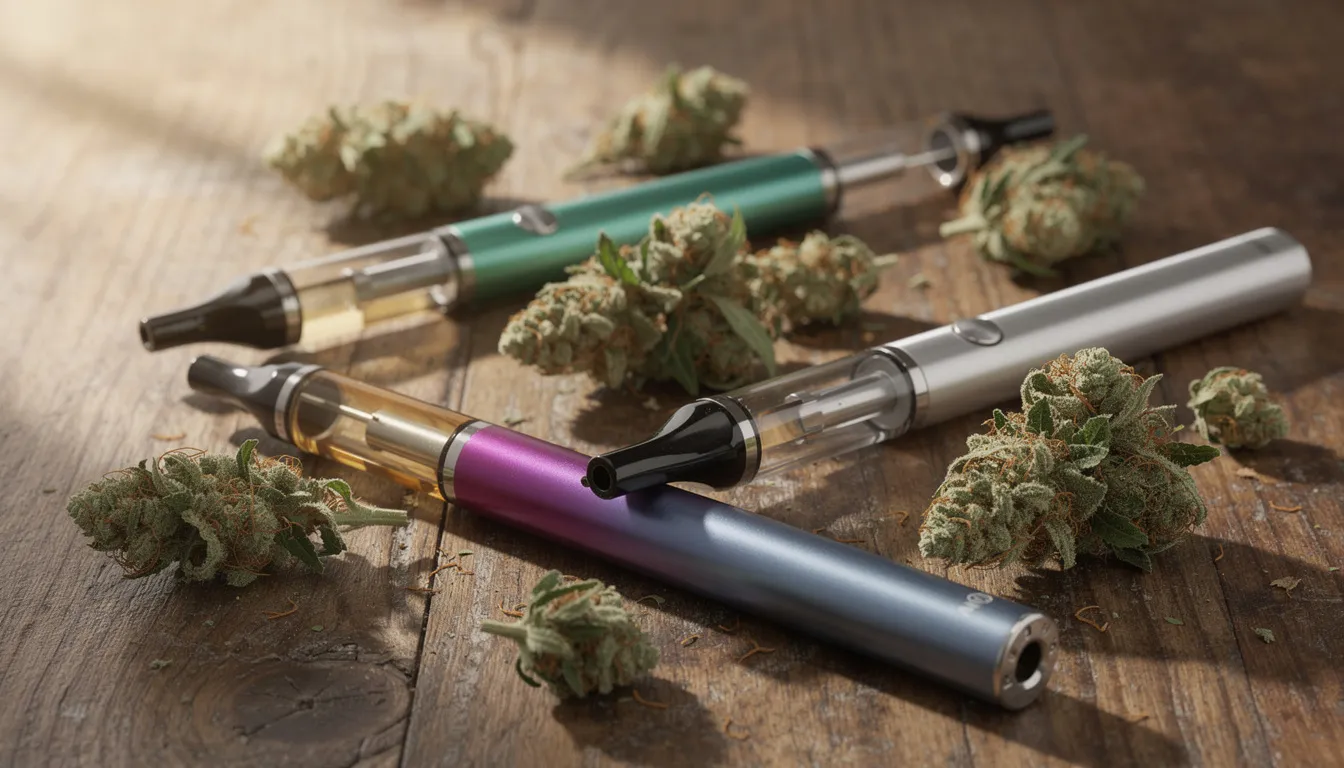
Main product forms:
-
Vaporizer cartridges (vape pens) with 10-OH-THC distillate
-
Cannabis flowers with added 10-OH-THC (often with 60 10 OH THC enrichment)
-
Ready-made prerolls for immediate consumption
-
Concentrates for specialized vaporizers
Regulatory requirements: Delta-9-THC levels must be below the prescribed limits in the EU – typically less than 0.2% depending on the country. Manufacturers specifically use derivatives such as 10-OH-THC to comply with these regulations.
Instructions for use:
-
Start with a low starting dose and increase slowly.
-
Do not combine with alcohol or sedatives.
-
Do not actively participate in road traffic after consumption
-
Wait at least 2-3 hours before increasing the dose.
Storage recommendations:
-
Store in a cool place (15–20 °C)
-
Store in a dry place
-
Protect from light (dark containers)
-
Seal airtight to prevent oxidation
Quality assurance: Products should always be purchased with laboratory analyses (certificates specifying levels and impurities). Reputable suppliers provide this information on their website or upon request in their shop.
Flowers and prerolls containing 10-OH-THC
10-OH-THC-enriched flowers And ready-made prerolls are among the most popular product forms on the current market. They combine the familiar consumer experience with the specific properties of this milder cannabinoid.
-
10-OH-THC It is frequently applied to industrial hemp flowers to comply with legal Delta-9-THC limits while still achieving noticeable effects.
-
Prerolls with a standardized 10-OH-THC content are especially designed for beginners and casual users.
-
Burning the flowers produces smoke and combustion products – vaporizing them in vaporizers can serve as a less harmful alternative.
-
Flowers and prerolls are particularly sensitive to light and air.
-
Storage should be in resealable, opaque packaging.
-
Regularly checking the condition (humidity, smell, color) helps to detect quality losses.
Vapes & Concentrates
Vapes and concentrates offer a discreet and fast-acting way to consume 10-OH-THC. This product category has gained significant importance in recent years.
-
10-OH-THC vapes are usually offered as cartridges with carrier liquids – typically plant-based glycerin/glycol bases or terpene mixtures.
-
The Inhalation via e-cigarettes or special cannabis vape devices enables rapid action within minutes
-
Users can titrate the dose more easily in small increments – an advantage with a milder cannabinoid.
-
The duration of action after inhalation is typically 1–3 hours.
Safety notice: Avoid products with questionable additives such as vitamin E acetate. Choose only products with transparent ingredient lists and a provider website that uses cookies and has a privacy policy that indicates reputable business practices.
Legal status & safety information
The legal situation regarding 10-OH-THC can change depending on the country and time. The following section focuses on the DACH region (Germany, Austria, Switzerland) and the EU, but individual verification of current laws remains essential.
Regulatory classification:
-
In many European countries, 10-OH-THC is legally in a gray area as of 2023/2024.
-
As long as the content of classic delta-9-THC remains below the legal limits (typically 0.2–0.3%), products can be legally sold.
-
National laws such as the German Narcotics Act, the NPSG (New Psychoactive Substances Act) and Novel Food regulations must be reviewed individually.
-
Following legal changes in Germany starting in 2024, cannabis regulation has changed – up-to-date information is essential.
Recommendation: Always check the current legal situation in your own country before purchasing or using any product. If in doubt, seek legal advice.
Safety instructions:
-
Do not consume during pregnancy or breastfeeding.
-
Do not operate vehicles or machinery after consumption
-
Use only after consulting a doctor if you have cardiovascular disease.
-
Do not take if you have a known mental illness without professional medical supervision.
Interactions: Simultaneous use with other psychoactive substances such as alcohol, benzodiazepines, or opiates can significantly increase the risk of adverse effects. A doctor should be consulted if the medication is taken regularly.

Conclusion
10-OH-THC represents an interesting development in the field of cannabinoid chemistry. As hydroxylated THC derivative With its milder psychoactive effects, it appeals to users who are looking for controlled effects without an overwhelming high.
-
Effective profile: The lower CB1 affinity leads to gentler experiences compared to classic THC and 11-OH-THC.
-
Application potential: Theoretical benefits for relaxation, sleep and well-being are plausible, but not scientifically proven.
-
Market availability: Products such as vapes, flowers and prerolls They have been increasingly offered in Europe since the early 2020s.
-
Duty of care: Quality and legal issues require careful examination before purchase – pay attention to laboratory analyses and reputable suppliers.
A notice: This article is for informational purposes only and does not replace medical or legal advice. For health-related questions or uncertainties regarding the legal situation, please consult appropriate professionals.
FAQ – Frequently Asked Questions about 10-OH-THC
How does the feeling differ under 10-OH-THC compared to classic THC?
Users often report a clearer head and less intense perceptual changes than with classic THC. The effects are frequently described as more physically relaxing, rather than intensely intoxicating. The feeling of control is usually maintained, and cognitive impairments are less pronounced. However, individual differences are significant – factors such as dosage, tolerance, and personal sensitivity considerably influence the experience.
Is 10-OH-THC detectable in drug tests?
Standard THC drug tests are designed to detect THC metabolites in general. Because 10-OH-THC is structurally closely related to these metabolites, its use can lead to positive test results—even if the test isn't specifically looking for 10-OH-THC. For individuals subject to regular drug testing (e.g., for work), this is an important consideration before consuming THC.
Can I combine 10-OH-THC with other cannabinoids like CBD?
Many users combine different cannabinoids to modulate effects—an approach discussed as the "entourage effect." However, scientific data on specific synergies between 10-OH-THC and CBD are lacking. Anyone wishing to try combinations should start with very low doses of both substances and carefully observe their body's reaction.
How long does the effect of 10-OH-THC last?
When inhaled (vapes, vaporized flowers), the effects typically begin after 5–15 minutes and last approximately 1–3 hours. With oral ingestion, provided suitable products are available, the onset of effects can take 30–90 minutes, but the duration can extend to 4–6 hours. Factors such as dose, individual metabolism, stomach contents, and tolerance can significantly vary these values.
Is 10-OH-THC approved for medical use?
10-OH-THC currently (as of 2023/2024) does not have specific pharmaceutical approval in the EU or Germany. It is used exclusively in research or as a lifestyle product and is not a substitute for medically prescribed medications. Anyone considering therapeutic applications of cannabinoids should consult a physician experienced in cannabis medicine.
Share:
DNT9: Effects, legality & application of the new cannabinoid
Superior Blend – What is really behind the new cannabinoid?